
AMPATH Nepal’s Community-Based Approach to Care Meets People Where They Live
In a hillside community outside Kathmandu, Nepal, residents file into a temporary screening camp set up in a ward office. Blood pressure cuffs are wrapped. Finger pricks are done carefully.
Conversations unfold in familiar voices, led by Female Community Health Volunteers who know the families they are serving. For many, this is the first time they have been screened for chronic disease.
Scenes like this are becoming increasingly common across parts of Nepal as AMPATH expands its response to noncommunicable diseases that often go undetected until serious complications appear.
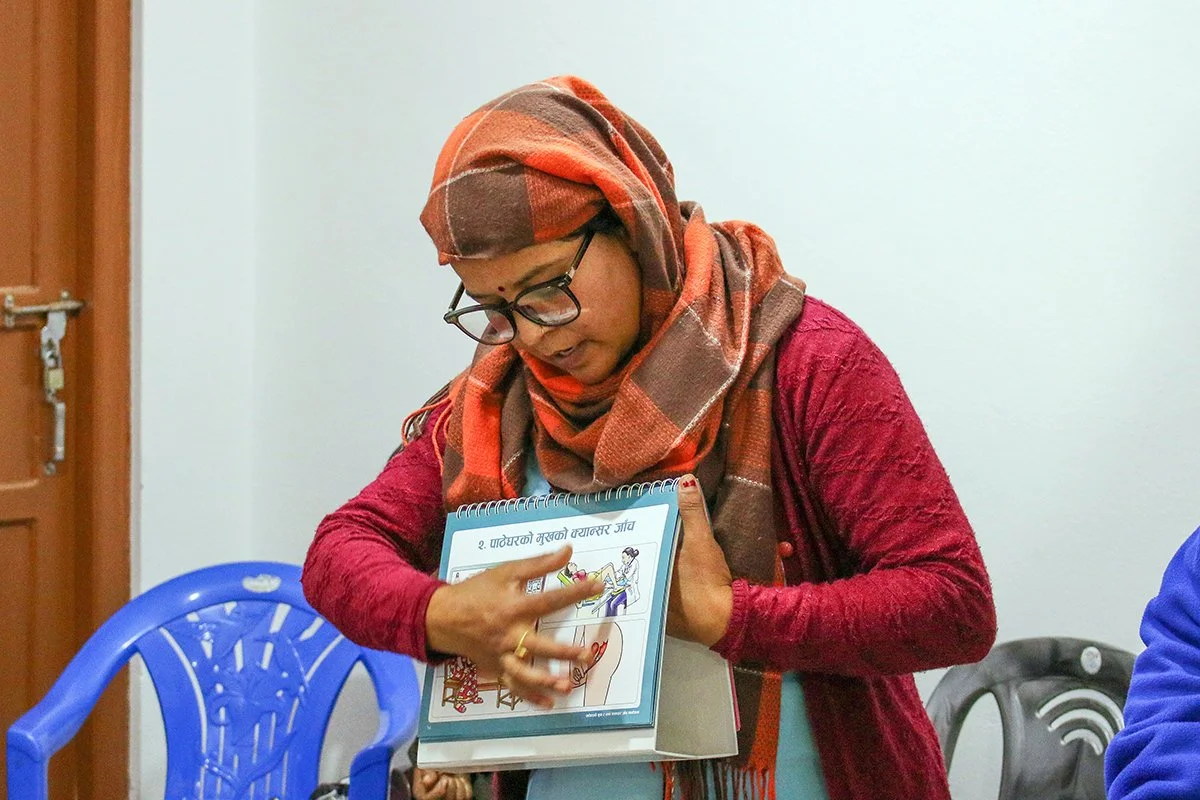
A Female Community Health Worker provides health education at a screening.
Through the AMPATH Global Noncommunicable Disease Initiative, AMPATH Nepal is leading a community-centered effort to strengthen how hypertension and diabetes are detected and managed over time in resource-limited settings. The work in Nepal is part of a larger global collaboration spanning Kenya, Ghana and Nepal, but it is deeply rooted in local systems, local leadership and community trust.
The multi-country initiative is supported by Indiana University through a three-year grant of $2.5 million from the Eli Lilly and Company Foundation.
Noncommunicable diseases now account for more than 70 percent of all deaths in Nepal, driven largely by untreated hypertension and diabetes. These conditions increase the risk of heart attack, stroke, kidney disease and premature death, yet many people remain unaware they are affected until complications arise.
“Noncommunicable diseases require a very different way of thinking about care,” said Archana Shrestha, PhD, MPH, principal investigator for the AMPATH Global NCD Initiative in Nepal and co-director of AMPATH Nepal. “You are not treating an acute illness. You are walking alongside people for years, sometimes for the rest of their lives. That means the health system has to meet people where they are.”
AMPATH Nepal is a partnership of Dhulikhel Hospital, Kathmandu University School of Medical Sciences, and a consortium of academic health institutions, led by Mount Sinai.
Building on existing systems
Nepal has rolled out PEN, the Package of Essential Noncommunicable Diseases developed by the World Health Organization, designed to integrate screening and care for chronic diseases into primary health care. In practice, however, limited resources, heavy workloads and gaps in follow-up have made consistent implementation difficult.
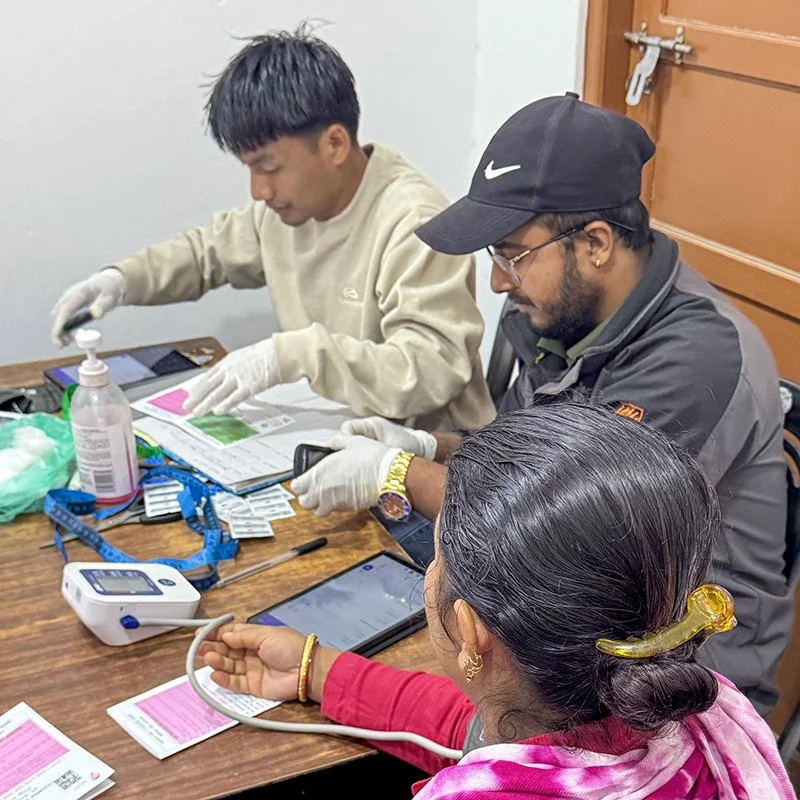
Community members receive screening for diabetes and hypertension.
AMPATH Nepal’s approach focuses on strengthening what already exists. Working closely with municipalities, health posts and Female Community Health Volunteers, the project brings screening directly into communities while reinforcing links to facility-based care.
Community screening camps are conducted in rural and peri-urban areas, often alongside existing government outreach programs. Adults aged 18 and older are screened close to home, reducing barriers related to distance, cost and awareness.
“These camps are not just about measuring blood pressure or blood sugar,” said Nishtha Balla, program coordinator for the initiative in Nepal. “They are also about starting conversations, addressing fears, and helping people understand how these conditions can be managed.”
Individuals who screen positive are linked to care at nearby health facilities. Follow-up phone calls and counseling are used to encourage attendance and reduce loss to care, an ongoing challenge in chronic disease programs worldwide.
Co-designing care with communities
Beyond screening, AMPATH Nepal is piloting a group-based care model for hypertension and diabetes that adapts lessons from AMPATH Kenya while reflecting Nepal’s social and cultural context.
Rather than relying exclusively on individual clinic visits, group care brings patients together for shared appointments that combine clinical monitoring, peer support and education. Evidence from Kenya shows that this approach can improve patient engagement and long-term disease control.
What sets the Nepal model apart is how it was created. Through a series of co-design workshops, patients, health workers, Female Community Health Volunteers, municipal leaders and national experts worked together to identify barriers to care and shape solutions.
“We wanted communities to tell us what would work, not the other way around,” said Neha Limaye, MD, MPH, principal investigator for the AMPATH Nepal NCD Initiative, assistant country director of AMPATH Nepal, and assistant professor of Medicine, Pediatrics and Global Health, Icahn School of Medicine at Mount Sinai. “That process has helped build ownership from the very beginning.”
Through these workshops, communities identified Female Community Health Volunteers as trusted co-facilitators, with health workers providing clinical oversight. Participants also emphasized the importance of peer leaders to support motivation, continuity and shared learning over time.
Strengthening data for long-term care
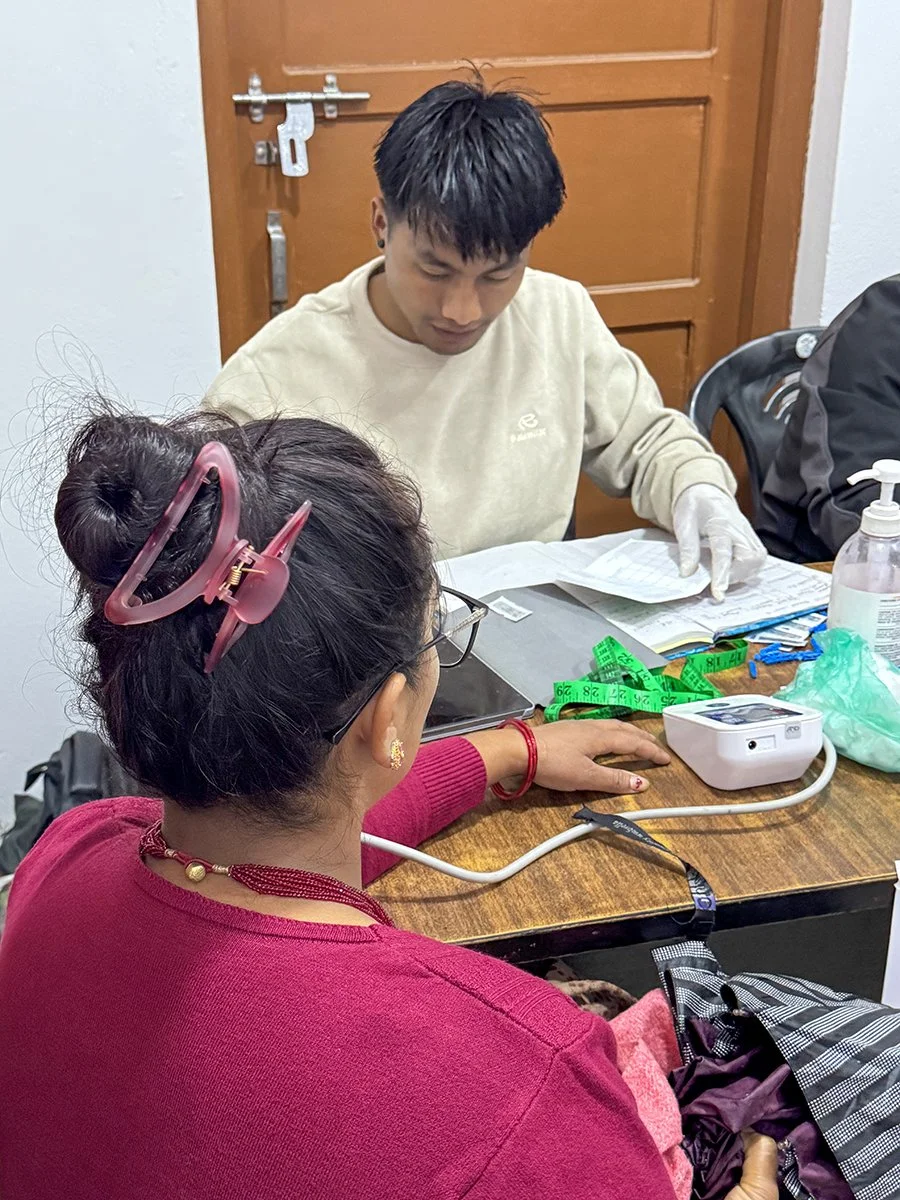
A community member has their blood pressure checked.
Managing chronic disease requires consistent follow-up, yet many health systems lack reliable tools to track patients over time. To address this gap, AMPATH Nepal is adapting the DHIS2 digital health platform for hypertension and diabetes care.
DHIS2 is already used by Nepal’s Ministry of Health as a national health management information system. By customizing a DHIS2 tracker package based on World Health Organization HEARTS indicators, the project enables individual patient data to be recorded offline and synced when connectivity is available.
“This allows us to follow patients across screening, diagnosis and care, instead of losing them between steps,” said Anant Raut, co-investigator and digital health lead for the project and AMPATH Nepal’s program manager.
Dashboards generated through DHIS2 will help teams monitor screening coverage, follow-up rates and outcomes, supporting continuous improvement and long-term planning.
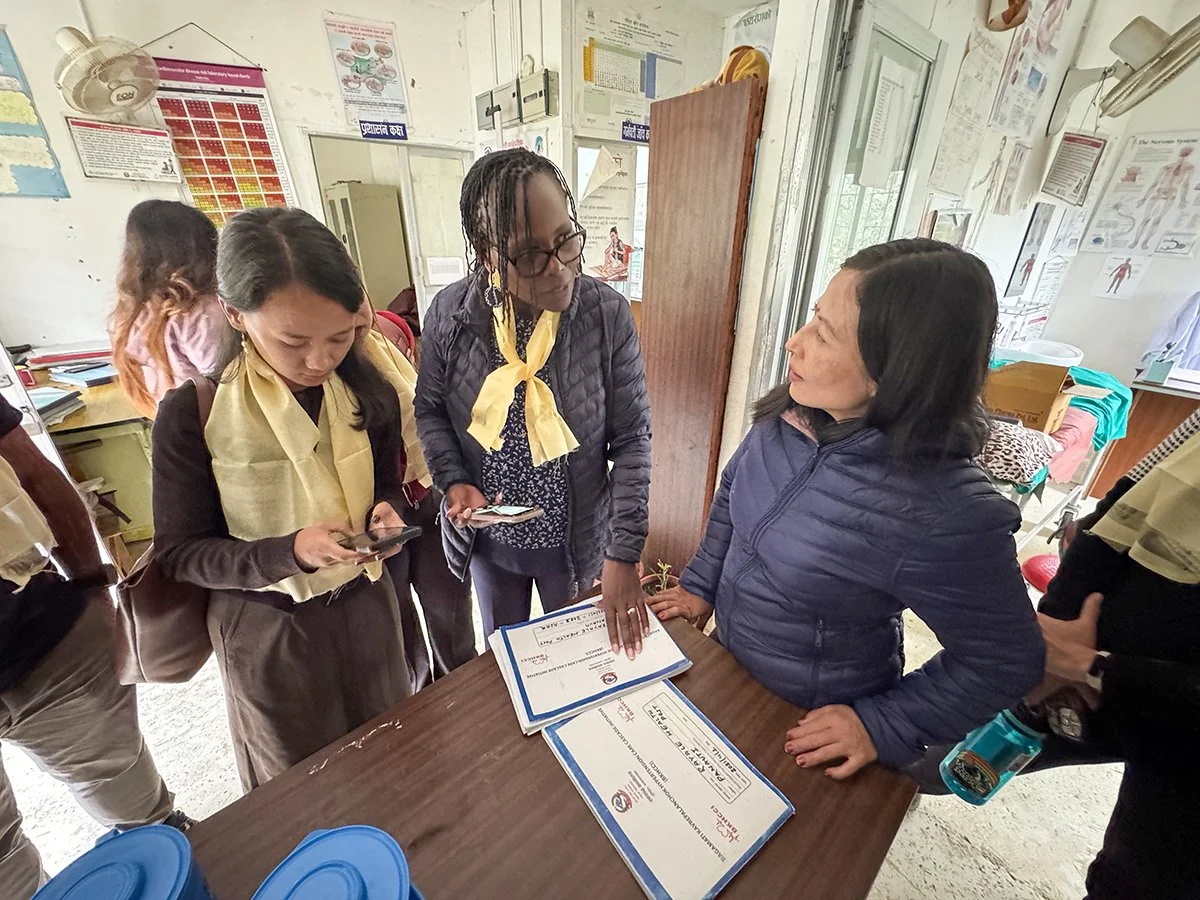
Dr. Jemima Kamano (center), principal investigator of the AMPATH NCD grant, speaks with Sumatra Bal, a health facility leader in rural Nepal.
Learning across the AMPATH network
Nepal’s work is closely connected to AMPATH’s broader global experience, particularly in Kenya where community-based chronic disease care has been implemented at scale.
“Many of the challenges Nepal is facing now are ones we encountered earlier in Kenya,” said Dr. Jemima Kamano, principal investigator for the AMPATH Global NCD Initiative and consultant endocrinologist at Moi University School of Medicine, an AMPATH Kenya partner. “What we have learned is that trust, communication and consistent follow-up are critical to providing good care.”
The exchange is mutual. Nepal’s experience with co-design, municipal engagement and integration into national digital systems is informing discussions across the AMPATH Global NCD Initiative.
Looking ahead
As the project moves forward, AMPATH Nepal will continue community screening while formally evaluating the group-based care model through a randomized trial. The aim is to demonstrate not only improved blood pressure and diabetes control, but also practical pathways for sustainability and scale-up within Nepal’s health system.
For donors, supporters and partners, the initiative represents an investment in durable systems of care that can address chronic disease in resource-constrained settings.
“This work is about building something that communities can carry forward,” said Dr. Shrestha. “With sustained partnership and support, we believe Nepal can show what effective, people-centered NCD care looks like.”